What You Need to Know Before You Decide
Every patient who contacts us has done their research. What they are looking for — beyond the clinical facts — is someone they can trust to be honest about what this treatment involves, what it can achieve, and what it cannot. This page is written to give you exactly that.
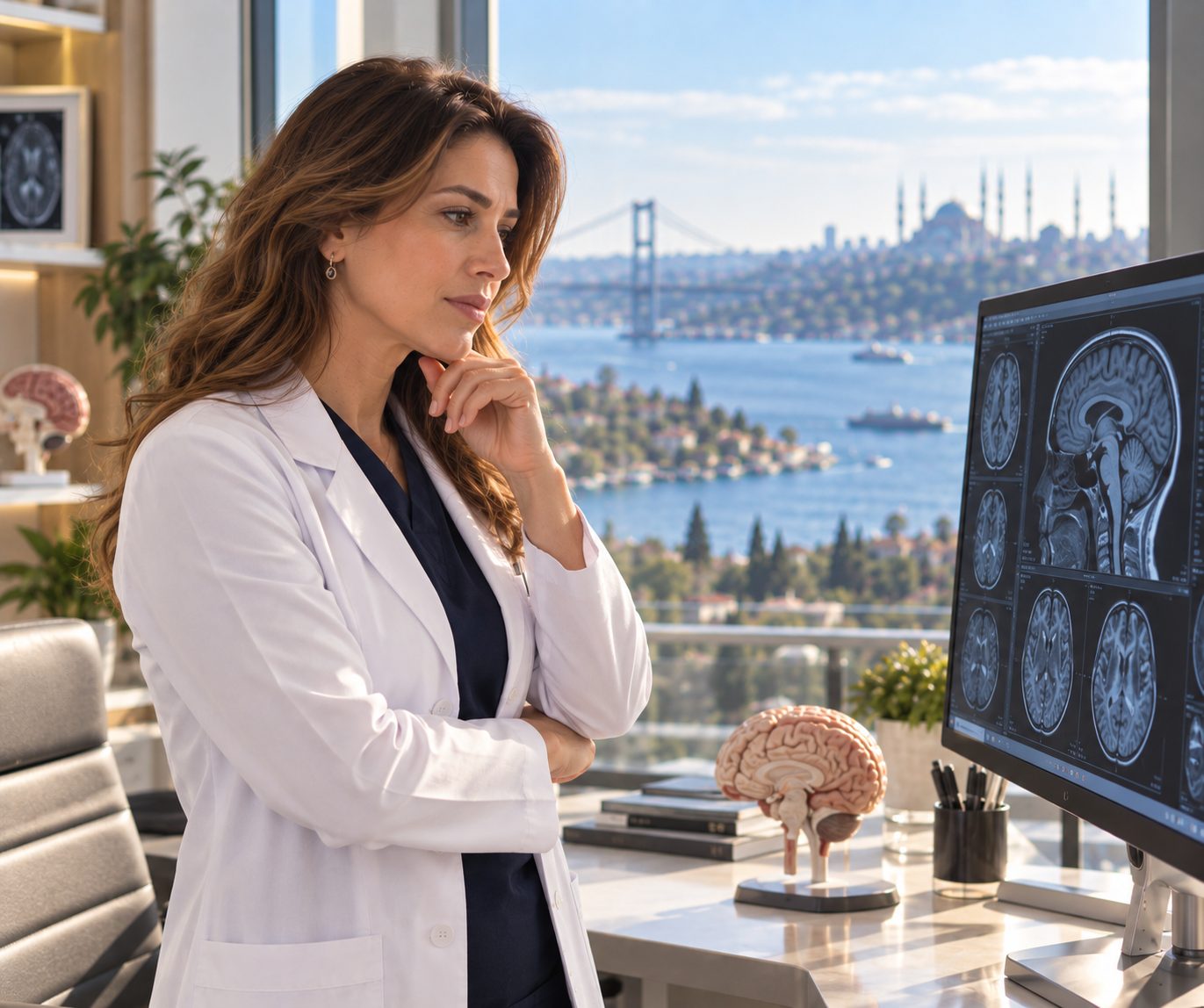
Medical Center Klinik's neurology and neurosurgery programme provides access to a multidisciplinary neurological team — encompassing neurologists, neurosurgeons, neuroradiologists, neuropsychologists, and neurorehabilitation specialists.
The programme covers complex diagnosis and second opinion consultations for conditions including epilepsy, multiple sclerosis, Parkinson's disease, dementia syndromes, peripheral neuropathy, headache disorders, and movement disorders. Advanced neuroimaging including 3T MRI with functional and spectroscopic sequences, MEG, and CT perfusion is available.
Neurosurgical procedures include brain tumour surgery (glioma, meningioma, metastatic disease) using intraoperative MRI and awake craniotomy where indicated, cerebrovascular surgery (aneurysm clipping and coiling, AVM treatment), spine surgery (cervical and lumbar disc surgery, spinal stenosis, spinal cord tumour), deep brain stimulation for Parkinson's disease and movement disorders, and functional neurosurgery for epilepsy.
Who This Treatment Is — and Is Not — For
Our medical team will give you an honest assessment during your free consultation. We do not recommend treatment that is not clinically appropriate — ever. Here is the general candidacy picture for this procedure.
Our coordinated neurology and neurosurgery programme accepts patients with complex neurological conditions requiring specialist expertise that may not be readily available in their home country. International patients frequently present for second opinions on imaging findings, surgical recommendations for brain or spine conditions, access to MS disease-modifying therapies, or deep brain stimulation evaluation.
All neurosurgical cases undergo multidisciplinary review before operative consent is obtained. Our partner clinical team will advise candidly when conservative management is the evidence-based recommendation, and when surgery offers meaningful benefit over the natural history of the condition.
What Happens, and When
From your first message to your final follow-up, every step is managed by your dedicated coordinator. You will never be passed between departments, left without an answer, or surprised by something you were not told to expect. Here is exactly what the process looks like.
Initial neurology consultation
clinical history, neurological examination, and review of existing investigations
Advanced neuroimaging
3T MRI with sequences appropriate to the clinical question; CT, PET, or EEG as indicated
Multidisciplinary neuro team review for surgical cases
neurosurgeon, neuroradiologist, neuroanesthesiologist, and neurophysiologist
Treatment plan presentation
medical management, interventional, or surgical options discussed with full explanation of risks and expected outcomes
Surgery performed with intraoperative monitoring (MEP, SEP, EEG) and neuroimaging where indicated
Intensive care or neurocritical care monitoring post-operatively
duration determined by procedure complexity
Neurorehabilitation assessment initiated during inpatient stay; discharge planning coordinated with home rehabilitation team
Follow-up imaging and clinical review at 4–6 weeks; remote neurological consultation for international patients
What to Expect After Treatment
Recovery is not something that happens to you — it is something you and your medical team manage together. Our aftercare programme continues long after you leave Istanbul, with scheduled follow-up consultations, direct access to your clinical team, and full documentation for your GP at home.
Recovery from neurological procedures varies widely based on diagnosis and intervention. Cranial neurosurgery patients require inpatient admission of typically 5–10 days, followed by a period of neurorehabilitation. Spinal surgery patients are typically mobilised within 24 hours of surgery and discharged within 3–5 days.
All neurosurgical patients are enrolled in our remote follow-up programme and have access to our neurorehabilitation team for guidance on return-to-activity and functional recovery. For patients with neurological conditions requiring ongoing medical management, telemedicine neurology consultations are available to support continuity of care.
Everything in Your Package — No Hidden Costs
Every item below is confirmed in writing before you commit. There are no surprise charges, no optional extras added at the last moment, and no administrative fees. The price we quote is the price you pay.
How Much Does This Cost?
We provide a personalised cost breakdown after your free consultation — once we have reviewed your specific case, medical history, and treatment goals. There is no commitment required to receive a quote, and no pressure to proceed.
International patients typically pay significantly less than equivalent treatment in the UK, Germany, or the United States — with no compromise on clinical quality, materials, or aftercare standards.
Request Your Free Quote →Answers from Our Patient Coordinators
These are the questions our international patient team answers every day. If yours is not listed here, reach out directly — we respond within 24 hours, without obligation.
Can I get a second opinion on a brain tumour diagnosis?
Yes. Second opinion consultations are a formal service at our partner neuroscience centre. Patients submit MRI imaging, pathology reports, and existing treatment recommendations. The partner facility's multidisciplinary neuro team reviews the case and issues a formal written second opinion — typically within 7 working days. This service is available remotely or in person.
What is awake craniotomy and when is it used?
Awake craniotomy is a surgical technique in which the patient is kept conscious during parts of a brain tumour resection procedure, allowing the surgical team to monitor speech, movement, and cognitive function in real time. This enables maximum safe tumour removal while preserving neurological function in areas of the brain responsible for language or motor control.
Is deep brain stimulation available for Parkinson's disease?
Yes. Our neurosurgical team performs deep brain stimulation (DBS) for patients with Parkinson's disease, essential tremor, and dystonia. Candidacy is assessed through a multidisciplinary evaluation including neurological assessment, neuropsychological testing, and MRI. DBS programming and follow-up are coordinated with the patient's home neurologist.
What neuroimaging is available?
Our neuroimaging department operates 3T MRI scanners with full functional, spectroscopic, and diffusion tensor imaging capability. CT, PET-CT, and cerebral angiography are also available. All imaging is reported by subspecialist neuroradiologists with specific expertise in neurological conditions.
Ready to Take the First Step?
Your free consultation is a conversation — not a commitment. Tell us about your situation, and our medical team will give you an honest assessment of whether this treatment is right for you, what to expect, and what it will cost. We respond within 24 hours — 7 days a week.